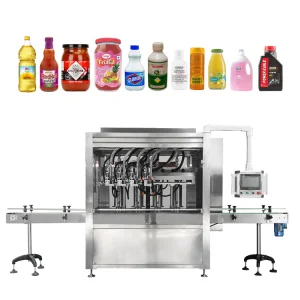
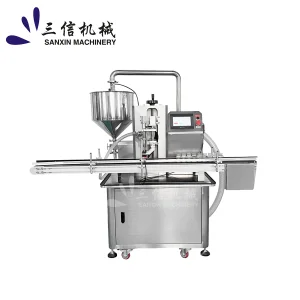
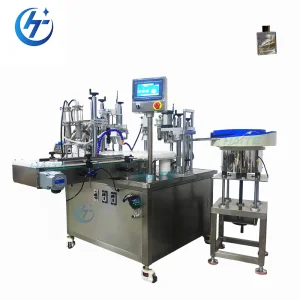
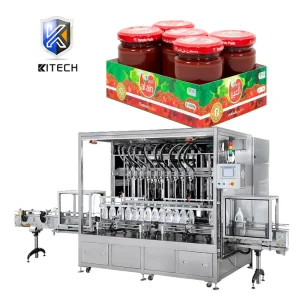
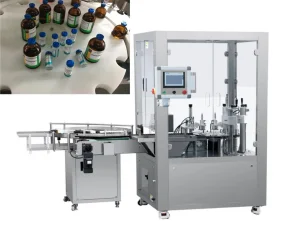
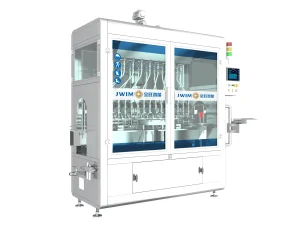
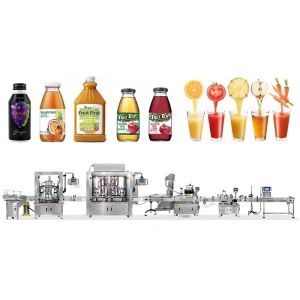
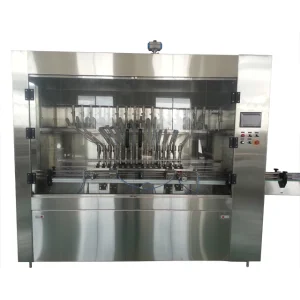
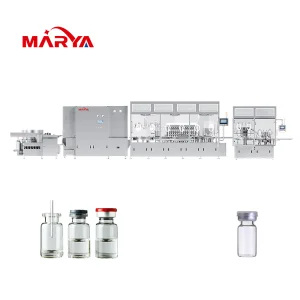
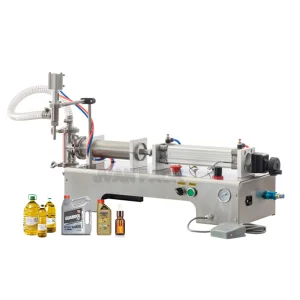
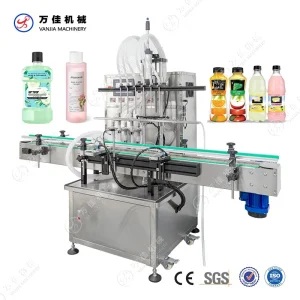
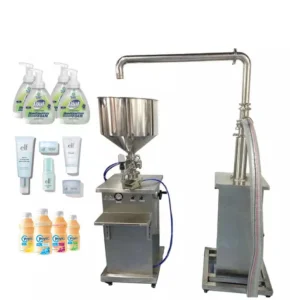
Explore our premium grade semi-automatic and automatic filling machines designed for maximum precision, scalability, and strict hygienic performance.
Established Year
Factory Footprint
GMP & CE Compliance
Exporting Nations
Within the global manufacturing landscape, the liquid packaging sector is undergoing a profound paradigm shift. The demand for semi-automatic bottle filling systems has escalated dramatically, driven by small-to-medium enterprises (SMEs) and specialized high-mix, low-volume (HMLV) production facilities. From pharmaceuticals and biotechnology to cosmetics, food and beverage, and agrochemicals, the need for reliable, versatile, and highly accurate fluid dispensing is paramount.
Semi-automatic systems strike the ultimate balance between manual labor cost efficiency and full-scale automation capital investment. For growing enterprises, transition phases require equipment that guarantees low product waste, compliance with sanitary standards, and rapid changeover times without requiring a massive footprint or highly complex programmable logic controller (PLC) configuration.
As major exporters based in China, manufacturers like Hebei Yongli Machine Co., Ltd are aligning designs with strict international frameworks. To access the European and North American markets, systems must incorporate food-grade SUS304 or SUS316L stainless steel contacts. PTFE, Viton, or Silicon gaskets must be FDA approved, ensuring that no chemical migration occurs during operation. In pharmaceutical configurations, CIP (Clean-in-Place) and SIP (Sterilize-in-Place) pathways must be seamlessly integrated to allow thorough cleaning cycles without dismantling the entire fluid path.
Choosing the correct filling mechanism dictates the overall efficiency of your packaging facility. The main technology paths engineered by top exporters include:
| Filling Principle | Best Suited Products | Viscosity Range | Key Advantage |
|---|---|---|---|
| Volumetric Piston Filler | Creams, Pastes, Sauces, Gels | Medium to High (Up to 100,000 cP) | Extreme volumetric repeatability (±0.5%) |
| Gravity Overflow | Water, Beverages, Thin Chemicals, Alcohols | Low (1 to 100 cP) | Consistent cosmetic fill levels in glass/PET |
| Gear Pump / Flowmeter | Honey, Heavy Oils, Cosmetics, Syrups | Low to Very High | Infinite fill volume setting via PLC control |
| Explosion-Proof Pneumatic | Alcohol, Solvent-based Hand Sanitizer, Ethanol | Low | No electrical hazards, spark-free safety |
The debate between pneumatic and servo-driven piston filling highlights a key operational choice. Pneumatic systems (using compressed air cylinders) are highly cost-effective, straightforward to maintain, and safe for explosive zones. Servo-driven piston fillers, on the other hand, offer precise control over the stroke speed profile. This eliminates foaming in surfactant liquids by starting the fill sequence slowly, speeding up mid-fill, and decelerating at the neck of the container.
A global leader in professional liquid packaging equipment manufacturing and custom layout design since 2009.
Founded in 2009, Hebei Yongli Machine Co., Ltd operates a state-of-the-art facility covering an area of 15,000㎡. We have established ourselves as a leading pioneer in the research, design, and production of robust liquid and beverage packing systems.
Our core catalog spans comprehensive water treatment plants, beverage and daily chemical filling systems, precision labeling machines, film shrink wrapping, carton packaging machinery, and complete custom-tailored production lines. Our mission centers on delivering mechanical reliability, structural longevity, and outstanding after-sales service.

Bespoke bottle geometry, label compatibility assessment, and facility layout design customized to your physical space constraints.
Precision fabrication begins immediately after technical drawings are approved. We run rigorous testing using your specific fluid samples.
Our engineers deploy worldwide to carry out on-site installation, system debugging, and operator training for peak productivity.
Enjoy lifelong technical support, fast component dispatch, and free online troubleshooting sessions during the warranty term.
Packaging configurations must adapt to the target market's structural limits. In North America and Western Europe, where labor costs are higher, our semi-automatic systems are often upgraded with semi-automated container feed tables and multi-head nozzle setups to boost output per worker. In parts of Asia, Latin America, and Africa, where regional power supply stability can vary, we supply units with robust mechanical backups, heavy-duty surge protection, and low-maintenance pneumatic systems.
The future of liquid filling systems lies in sensor integration and IoT diagnostics. While traditional semi-automatic machines rely purely on manual cycle timers or mechanical limit switches, next-generation systems integrate miniature PLC hubs that monitor and log diagnostic parameters:
Expert insights on selecting, operating, and maintaining industrial semi-automatic bottle filling equipment.
Discover our specialized liquid, paste, and gel filling systems engineered to optimize your packaging line.
 Yongli Machine