Explore our engineering solutions for handling corrosive chemicals, pharmaceuticals, and organic farming ingredients.
An in-depth analysis of chemical properties, viscosity management, and dosing systems in the modern agricultural packaging sector.
Unlike plain municipal water or carbonated soft drinks, commercial agricultural liquid fertilizers—specifically NPK compounds, chelates, amino acids, and concentrated humic acids—have complex chemical matrices. Their pH levels can vary from highly acidic (e.g., mixtures containing phosphoric acid or sulfuric acid derivatives) to strongly alkaline. This creates severe chemical degradation on standard mechanical components.
Additionally, the suspension of micro-nutrients can lead to sedimentation. This abrasive particles will tear down traditional rubber seals and brass fittings. To guarantee a machine lifetime of over 10 years, modern factories must switch to anti-corrosive materials like PVDF, PTFE, Hastelloy, and specialized plastics.
Selecting the appropriate filling technology depends heavily on viscosity ranges, chemical corrosion potential, foaming tendencies, and structural configuration. Below is a professional comparison of the primary filling methods engineered by industry leaders in China:
| Filling Technology | Suitable Viscosity | Best Application | Key Engineering Advantage |
|---|---|---|---|
| Volumetric Piston Filler | Medium to High (up to 50,000 cps) | Organic suspensions, pastes, viscous chemical blends | Exceptional volumetric displacement accuracy, self-priming cylinders |
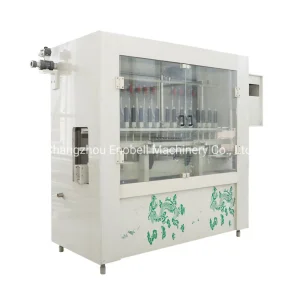
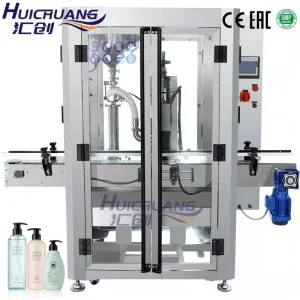
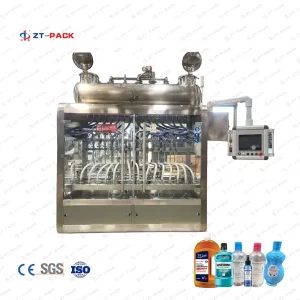
| Overflow Gravity / Time Filler | Low to Medium (under 2,000 cps) | Foaming soapy liquids, thin chemicals, mineral solutions | Continuous overflow nozzle limits foam creation, keeps consistent bottle fill level |
| Magnetic / Coriolis Flow Meter | Wide Range (Low to Very High) | Premium agricultural additives, micro-dosing blends | No contact parts inside measuring chamber, ultra-accurate measurement down to ml |
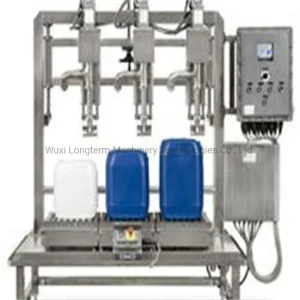
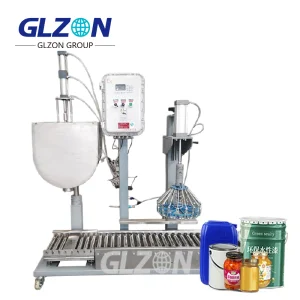
| Weighing / Load Cell Filler | High to Extreme (drums, barrels, bulk) | Large scale IBCs, 20L jerrycans, chemical oil drums | Independent of fluid expansion due to ambient temperature shifts |
Understanding the details of explosion-proof systems, anti-acid architectures, and foaming suppression mechanisms.
When packaging strong chemical solutions like concentrated sulfuric acid formulas or highly acidic phosphate fertilizers, traditional stainless steel 304 or even standard SUS316L will deteriorate over time.
To address this issue, our chemical-grade machines use thick-walled PVC, Polypropylene (PP), or PVDF liquid contact paths. The frames are completely sealed with anti-corrosive chemical coatings, and all structural bolts are grade 316.
Furthermore, sliding guides and mechanical rods are shielded with flexible rubber bellows to protect them against ambient acidic fumes and vapor corrosion, preventing premature oxidation.
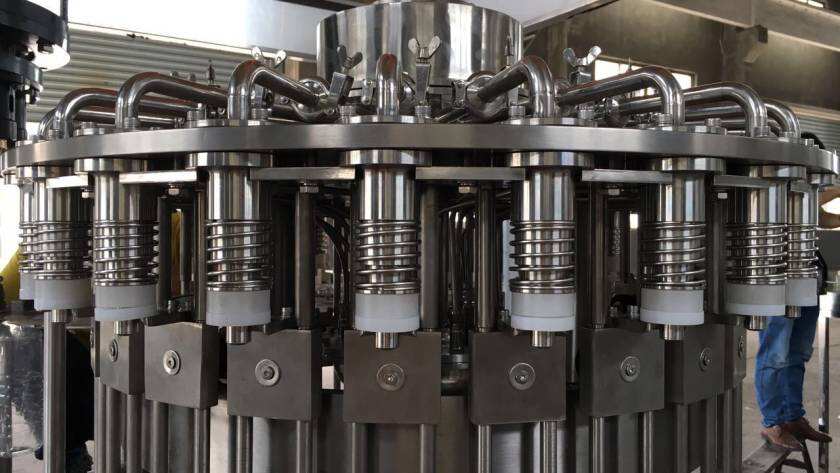
Many agricultural chemical concentrates use organic solvents or chemical reactions that generate flammable gases. Liquid fertilizer factories require intrinsically safe, explosion-proof electronic configurations.
This requires ATEX or Zone 1/Zone 2 certified motors, armored power cabling, ex-proof terminal enclosures, and pneumatic logic controllers that minimize electrical sparks. Our automated drumming and bottling lines integrate heavy-duty ex-proof panels, ground wire systems to bleed static charge, and vapor recovery shrouds to extract chemical fumes before they escape the machine enclosure.
Organic formulations rich in amino acids or soap-based adjuvants can foam heavily during filling. This foaming causes spillages, weight inaccuracies, and capping issues.
To mitigate this, we employ bottom-up dive nozzles synchronized with servo-driven movement profile software. The filling lance starts at the very bottom of the bottle and slowly rises as the liquid level increases, maintaining the nozzle tip just below the surface. This approach minimizes splashing. Additionally, double pneumatic drip-catch pans collect residue, preventing contamination of container threads and ensuring secure sealing.
Supporting local compliance standards and providing on-site commissioning to guarantee smooth production transitions.
Our machinery is engineered to meet strict international standards, enabling quick installation in demanding markets like the EU, North America, and Australia.
We recognize that manufacturing downtime is highly costly. To address this, we maintain localized partnerships and dispatch technical teams globally to assist with system commissioning, operational training, and process validation.
Additionally, our PLC architectures are equipped with cloud-connected IoT modems. This allows our central engineers in China to perform secure remote diagnostics, adjust servo-motor curves, and trace sensor anomalies. This capability helps resolve issues quickly without waiting for on-site technicians.
A trusted pioneer in the development, research, and manufacture of industrial packaging machinery.
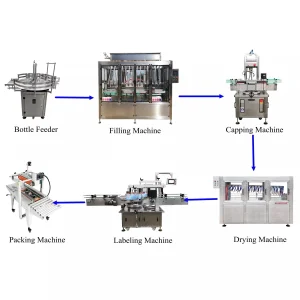
Hebei Yongli Machine Co., Ltd was founded in 2009, our company covers an area of 15,000㎡ . We are a leading enterprise in research and production of liquid and beverage packing machines. Our main products includes: water treatment plant, beverage and daily chemical filling machine, labeling machine, film shrink wrapping and carton packing machine, beverage processing and production lines.
Comprehensive layout and tooling design. We draft customized container, label, and machine layout configurations tailored to the client's plant dimensions and output expectations.
Following receipt of down payment, production commences on the system configuration. Equipment is designed to match the specified container geometry and footprint layout.
Upon delivery at the customer’s facility, we dispatch our qualified technical team to handle physical installation, machine calibration, debugging, and operator training.
We provide complimentary online technical support and supply replacement components during the warranty term, maintaining high production efficiency.
How automation, AI analytics, and green manufacturing are reshaping industrial filling systems.
Traditional fillers rely on manual adjustments to correct for density changes caused by ambient temperature shifts. Next-generation systems integrate inline mass density sensors with real-time feedback loops. The PLC uses algorithms to adjust valve opening times and servo stroke limits on the fly. This ensures high dosing accuracy even in changing environmental conditions.
As environmental regulations restrict single-use plastics, agricultural producers are adopting biodegradable polymers, recycled PET (rPET), and light-weighted glass. Future filling lines are designed to handle these thinner, fragile containers safely. High-precision torque capping prevents damage to delicate threads, supporting sustainable packaging initiatives.
By integrating vibration sensors on major shafts and monitoring temperature profiles in pneumatic manifolds, our software can predict component wear. This allows operators to perform preventative maintenance during scheduled downtime, reducing unexpected failures and improving Overall Equipment Effectiveness (OEE).
Addressing key technical and operational questions from plant managers and packaging engineers.
Explore our high-viscosity gear pump filling units, multi-head inline systems, and specialized chemical packaging configurations.
 Yongli Machine