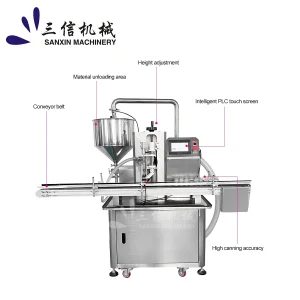
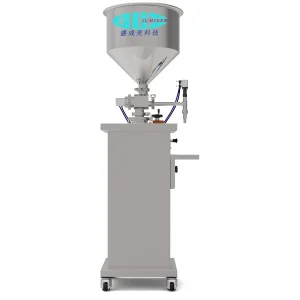
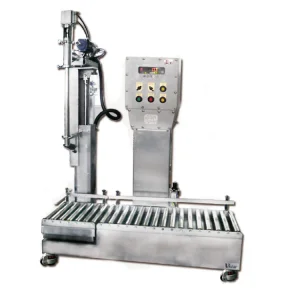
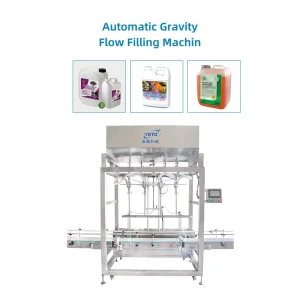
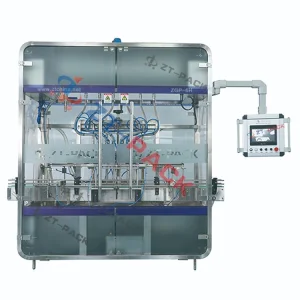
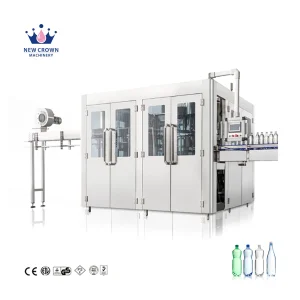
Explore our flagship industrial gravity and servo-actuated filling systems, customized to handle various viscosities, sanitization parameters, and container styles.
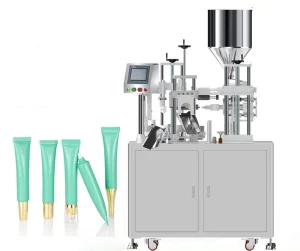
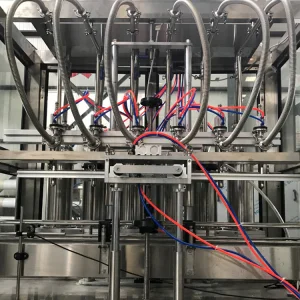
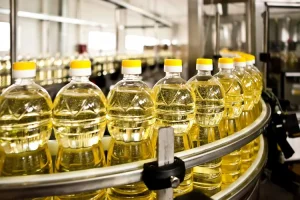
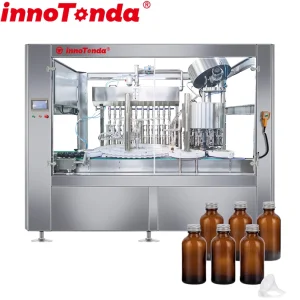
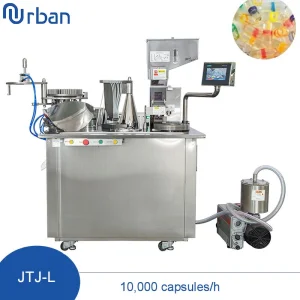
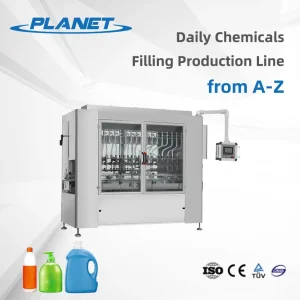
In modern industrial packaging, gravity filling systems are essential for handling free-flowing, low-to-medium viscosity liquids. Unlike piston fillers or rotary positive-displacement systems, gravity fillers leverage the physical principle of hydrostatic head pressure. Gravity-fed designs guide the liquid from an overhead supply tank directly into containers, eliminating mechanical shear and ensuring gentle product handling.
To control volumetric accuracy, a pneumatic actuator controls a timed-flow filling nozzle. When the container reaches the filling station, the nozzle opens for a precise duration. Since the pressure at the nozzle remains constant (governed by continuous level-control sensors in the overhead reservoir), the volume of product delivered is directly proportional to the open duration. The volumetric output is calculated using a modified form of Torricelli's Law:
Where Q represents the volumetric flow rate, C_d is the discharge coefficient of the nozzle, A is the cross-sectional area of the filling nozzle, g is the acceleration due to gravity, and h is the height of the liquid column above the nozzle. Maintaining a constant liquid level (h) is essential. Modern gravity filling systems utilize analog level probes connected to PLC controllers to regulate product feed pumps, ensuring negligible deviations in fill levels.
Choosing the right liquid filling technology depends on product viscosity, chemical composition, particulate loading, and target production speeds. Below is an engineering comparison of the primary industrial liquid filling systems:
| Filling Principle | Suitable Viscosity Range | Volumetric Accuracy | Ideal Applications | Key Advantages |
|---|---|---|---|---|
| Timed Gravity | 0 - 1,500 cPs | ± 0.5% - 1.0% | Spirits, water, juices, solvents, thin acids | No dynamic seals, hygienic, easy CIP, cost-effective |
| Piston Filler | 1,000 - 150,000 cPs | ± 0.25% - 0.5% | Tomato paste, cosmetic creams, heavy oils | High pressure, accurate dosing for viscous fluids |
| Gravity Overflow | 0 - 800 cPs | Filled to consistent height | Foamy beverages, glass bottle spirits, detergents | Guarantees identical fill levels, prevents foaming |
| Servo Piston / Flow Meter | 0 - 50,000 cPs | ± 0.1% - 0.2% | Pharma vials, expensive chemicals, dynamic lines | Recipe control via PLC, minimal mechanical setup |
For procurement officers and operations directors, acquiring gravity filling machinery from China involves evaluating engineering capability, cost of ownership, and post-installation support.
China-made systems offer savings of 40% to 60% compared to Western European alternatives. Buyers prioritize heavy-gauge stainless steel (304/316L) frames, international-standard electrical components, and tooling compatibility.
Industrial units must meet safety standards like Europe's CE marking or North America's UL/CSA certifications. Sanitary systems require materials compliance with FDA 21 CFR standards for food and beverage applications.
Integrating downstream equipment (capping, labeling, secondary packaging) into a unified PLC protocol prevents line bottlenecks. Modern specifications require standard Ethernet/IP or Modbus TCP communication interfaces.
Gravity filling systems are widely used across diverse industries, each requiring specific configurations to optimize line efficiency and product quality.
The gravity filling landscape is evolving toward digital control and automated adjustment. Traditionally, operators manually adjusted nozzle stroke and cycle times. Modern systems feature Dynamic Valve Actuation Telemetry, where magnetic flow meters and digital feedback loops measure flow rate changes in real time, automatically compensating valve open durations to match changes in liquid temperature or viscosity.
Additionally, Robotic Changeover Systems are replacing manual nozzle height adjustments. Smart motorized linear actuators read the production recipe from the HMI and automatically adjust nozzle heights, spacing, and guide rail widths. This reduces changeover times from 45 minutes to under 3 minutes.
Founded in 2009, Hebei Yongli Machine Co., Ltd covers an area of 15,000 square meters. We are a leading enterprise in the research and production of liquid and beverage packaging machines. We provide integrated solutions, from water treatment plants to daily chemical filling machinery, labeling equipment, film shrink wrapping, carton packaging, and complete automated processing lines.
Leveraging over a decade of research, we supply complete turnkey bottling solutions to customers worldwide, ensuring reliability, low utility consumption, and compliance with strict sanitary protocols.
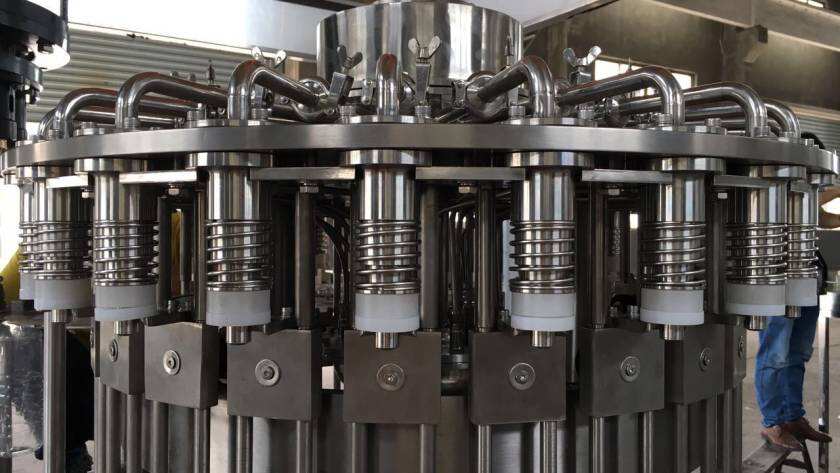
We provide bottle, label, and machinery layout designs tailored to our customer's specific spatial footprint and capacity goals.
After structural sign-off, we manufacture the machines using precise CNC machining centers, conforming strictly to the approved design specifications.
Our experienced field engineers deploy globally to manage installation, system calibration, commissioning, and on-site operator training.
We offer free online technical support and warranty-covered spare parts, maintaining system performance throughout its life cycle.
Answers to common technical, design, and regulatory questions from packaging engineers and buyers.
Gravity filling is ideal for thin, water-like liquids with low viscosities (under 1,500 cPs) that flow freely under atmospheric pressure. Examples include purified mineral water, industrial solvents, thin spirits, vinegar, juices, and essential oils. Viscous products or liquids with suspended particulates are better suited for piston, volumetric, or positive displacement pumps.
A high-quality gravity filler can achieve dosing accuracies of ±0.5% to ±1.0% of the target volume. This accuracy depends on keeping a constant liquid head in the overhead reservoir tank, which is managed via analog sensor feedback and automatic liquid inlet valves controlled by the PLC.
Yes. Adjusting the system for glass or plastic (PET, HDPE) involves configuring the container handling parameters. Plastic bottles may require neck clamps during filling to prevent collapsing, while glass bottles need mechanical positioning to align with the filling nozzles without chipping the container mouth.
Our sanitary gravity filling systems feature dedicated CIP pathways. When the CIP cycle starts, specialized wash manifolds latch to the filling nozzles. Hot water, caustic soda, or sanitizing agents run through the supply line, overhead reservoir, and nozzles, sterilizing the product contact pathways without needing disassembly.
For packaging volatile liquids, solvents, or alcohol-rich spirits, we design explosion-proof filling systems. These configurations include ATEX- or IECEx-rated components, explosion-proof motors (Class 1 Div 1/2), grounded metallic components to prevent static discharge, and purge systems for the electrical cabinets.
Our nozzles feature spring-loaded or air-actuated positive shut-off tips. When the timer ends, a pneumatic cylinder shuts the nozzle tip, blocking the fluid path. For highly surface-tension sensitive liquids, a vacuum-back system draws fluid residue back up into the nozzle tip.
Industrial packaging machines designed for high-capacity applications, high-viscosity products, and integrated processing lines.
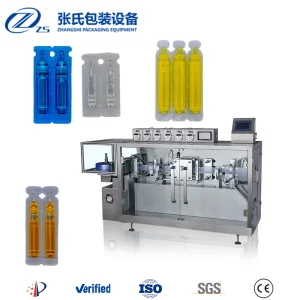
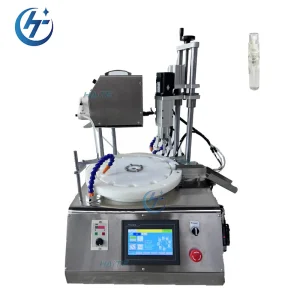
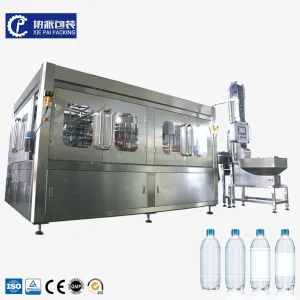
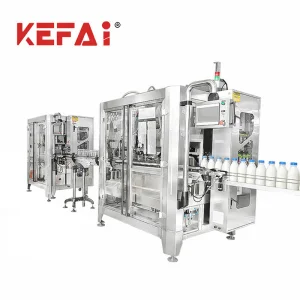
 Yongli Machine