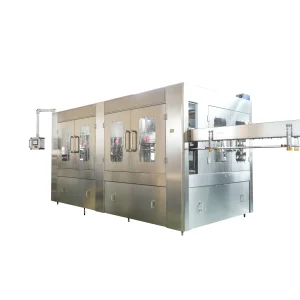
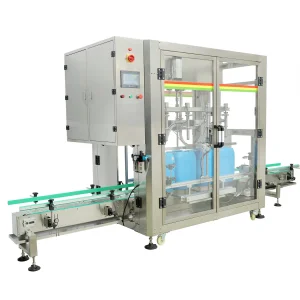
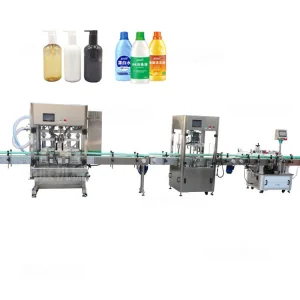
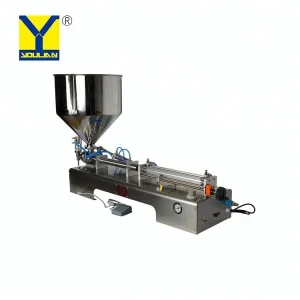
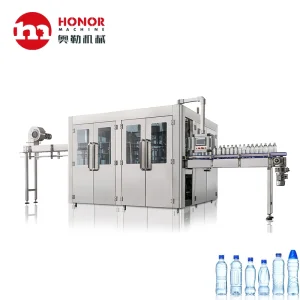
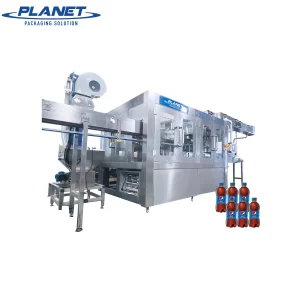
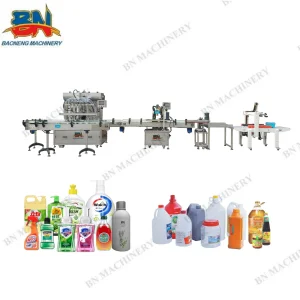
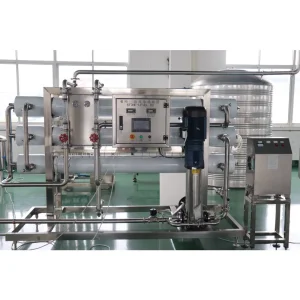
High-accuracy industrial machinery designed for diverse liquid viscosities, compliance environments, and high-speed packaging lines.
Understanding the shift from pneumatic cylinders to intelligent closed-loop servo control systems.
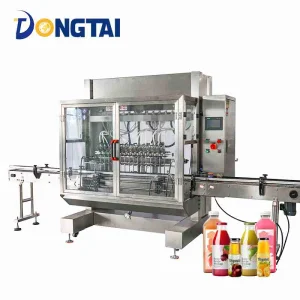
The volumetric piston filler remains the workhorse of the global packaging industry, particularly for high-viscosity pastes, particulate-laden sauces, cosmetic emulsions, and aggressive chemical reagents. However, the engineering principles governing these machines have undergone a major paradigm shift. Traditionally driven by mechanical cams or pneumatic cylinders, modern systems now increasingly leverage closed-loop servo motors.
Servo-driven piston systems allow operators to program custom velocity profiles for the piston stroke. This digital control is critical for managing non-Newtonian fluids that display shear-thinning or shear-thickening behavior. By tuning the acceleration and deceleration curve of the piston, manufacturers can completely eliminate splashing at the start of the cycle and prevent tailing or dripping at the end of the stroke. Furthermore, real-time feedback loops from mass flow meters or load cells can dynamically adjust the stroke length to correct for changes in temperature and density, ensuring volumetric accuracies of ±0.2% or better.
Technological Convergence: The integration of IoT telemetry enables predictive maintenance on piston seals and valve bushings, preventing catastrophic failures and reducing planned downtime by up to 35% in continuous 24/7 operations.
Looking to the future, the integration of smart materials and aseptic hygiene standards is driving the adoption of single-use, quick-disconnect fluid paths, and magnetic-levitation piston actuators. These developments eliminate the mechanical wear points inherent to traditional rotary or linear slide valves, paving the way for maintenance-free aseptic filling systems that meet the rigorous requirements of FDA, 3A, and EHEDG standards.
Allows real-time stroke adaptation based on fluid viscosity, density, and temperature variables, preventing splash and ensuring absolute control.
Automated clean-in-place and sterilize-in-place mechanisms utilizing specialized materials resistant to aggressive caustic sanitizers.
Continuous monitoring of seal wear, pressure drops, and cycle speeds to generate predictive analytics that optimize OEE (Overall Equipment Effectiveness).
Quantifiable performance parameters achieved by top-tier global packaging lines.
A premier engineering enterprise delivering high-capacity fluid packaging and processing systems.
Founded in 2009, Hebei Yongli Machine Co., Ltd has established itself as an industry-leading researcher and manufacturer of liquid and beverage packaging equipment. Spanning an expansive manufacturing facility of 15,000㎡, the company combines raw engineering expertise with state-of-the-art tooling to build rugged, dependable machinery tailored to global industrial demands.
The company’s product portfolio encompasses key components of modern packing architectures: advanced water treatment plants, beverage and daily chemical volumetric filling machines, high-speed labeling machinery, robust film shrink wrapping systems, automated carton packers, and complete turnkey liquid processing lines.
By controlling the entire process from structural design to precision cylinder honing and final assembly, Hebei Yongli guarantees high-level compliance, robust material selections (such as SUS316L stainless steel for wetted parts), and exceptional longevity.
Custom engineering design services, including detailed bottle geometry assessment, custom label integrations, and optimized plant layout mapping aligned to space constraints.
Execution begins immediately upon drawing approval, using advanced machining centers. All units undergo extensive dry run testing prior to dispatch.
Deployment of field service technicians directly to client facilities to manage installation, calibrate fluid paths, conduct site testing, and train operational staff.
Provision of ongoing remote technical support, direct PLC diagnostic links, and free replacement components during the warranty coverage period.
How piston-based technology adapts to distinct global markets and fluid properties.
Not all liquids behave similarly under shear or pressure. The table below outlines the primary industrial applications of piston fillers, illustrating how machine parameters must adjust to meet specific rheological and chemical demands.
| Industry Vertical | Representative Fluid | Key Technical Challenge | Piston System Solution |
|---|---|---|---|
| Food & Beverage | Honey, Tomato Paste, Fruit Juices with Pulp | Avoiding particulate damage while maintaining absolute hygienic pathways. | Rotary valve configuration with large port sizes to allow large particulates to pass without damage. |
| Daily Chemical / Cosmetics | Shampoo, Conditioners, Face Creams, Shower Gels | Preventing product foaming during high-speed dispenses. | Bottom-up dive nozzles synchronized with servo-driven piston profiles for soft-start filling. |
| Industrial & Agro-Chemical | Motor Oils, Pesticides, Strong Acids | Corrosive chemical wear on wetted parts and gaskets. | Cylinder designs using PVDF, Hastelloy, or PTFE seals with chemical-resistant plumbing. |
| Pharmaceutical | Ointments, Syrups, Sterile Liquid Suspensions | Total prevention of cross-contamination and strict dose precision. | Valveless rotary piston structures crafted from premium ceramics, optimized for SIP autoclaving. |
By mapping the physical characteristics of the target fluid to the correct valve architecture (rotary, check-valve, or pinch-valve), packaging engineers can secure high production speeds without sacrificing volumetric consistency.
Leveraging domestic production ecosystems for superior cost-to-performance benchmarks.
The global machinery market has undergone significant realignments, with Chinese manufacturers leading the charge in combining robust component standards with lean manufacturing methodologies. Facilities like Hebei Yongli’s 15,000㎡ plant utilize advanced CNC machining centers, coordinate measuring machines (CMM) for tolerance checks, and automated assembly bays that shorten overall lead times by up to 40% compared to traditional European suppliers.
Furthermore, China's vast supplier network for high-end automation components—including pneumatic controls, linear actuators, and structural extrusions—ensures that machinery is built using world-renowned components (e.g., Schneider Electric PLCs, Festo pneumatics, Omron sensors, and SMC valves) while remaining highly competitive on capital expenditure (CAPEX).
Procurement Value: Purchasing a Chinese-engineered system enables multi-national operations to scale lines quickly, achieving rapid return-on-investment (ROI) while maintaining a globally serviceable component database.
Crucial validation metrics for engineering teams evaluating piston filling systems.
Detailed documentation supporting installation qualification, operational verification under full speed, and process repeatability compliance.
ATEX, IECEx, or Class I Div 1 certifications for filling solvent-based chemicals, flammable cosmetics, or alcohol products.
Analysis of seal wear limits, power draw during peak speeds, clean-in-place water consumption, and parts availability timelines.
An analytical breakdown of the leading engineering firms defining global packaging standards.
When selecting a supplier for automated piston filling lines, engineering procurement teams typically evaluate manufacturers based on geographic footprint, technical specialization, compliance standards, and customization capabilities. Below is an overview of the characteristics defining the top ten manufacturers globally:
Choosing the ideal manufacturing partner depends heavily on the alignment between the manufacturer's technological focus (such as high-speed rotary packaging vs. linear flexible batch changes) and the production requirements of your facility.
Ensuring international installation safety, voltage compatibility, and local regulatory alignment.
Deploying heavy machinery internationally requires careful planning for regulatory compliance and physical compatibility. Standard industrial setups in North America require UL/CSA components and specific voltage ranges (e.g., 480V 3-phase, 60Hz), while European installations must strictly adhere to the CE Machinery Directive 2006/42/EC and EN standards for electrical safety.
To address these challenges, leading global suppliers integrate localization steps directly into their design cycles:
Electrical control cabinets are constructed to match the specific power grid configurations of the destination facility, utilizing locally sourceable breakers and contactors.
Installation of physical safety fences, light curtains, and dual-channel safety relays to meet OSHA or CE safety levels.
HMI controls are translated into the operating language, providing step-by-step diagnostic readouts for floor operators.
Furthermore, remote diagnostics via secure VPN routers (such as eWON or Tosibox) allow engineers located at manufacturing headquarters to update recipes, troubleshoot PLC ladder logic, and assist local maintenance crews without requiring immediate on-site visits.
Addressing core questions related to piston filling accuracy, maintenance, and system configurations.
Pneumatic pistons rely on air pressure and mechanical stroke-limit stops. They are highly cost-effective for single-volume runs but require manual physical adjustments to alter the fill volume. Servo-driven pistons use precision ballscrews driven by brushless AC motors, allowing the fill volume and speed curves to be adjusted dynamically via the HMI touchscreen recipe program, offering much higher flexibility and precision.
Piston systems handling particulate-heavy fluids (like fruit pieces or salsas) require rotary spool valves rather than spring-loaded ball-check valves. The rotary valve rotates mechanically to align open channels, allowing particulates to pass from the hopper into the cylinder and then out of the nozzle without shearing or crushing the solids.
Piston seals must be regularly inspected for wear to prevent product leakage. In daily operations, check-ups should occur every 3-6 months depending on fluid abrasiveness (e.g., highly abrasive cosmetic scrubs vs. smooth water-based syrups). Modern clean-in-place configurations allow CIP flushing to remove residue before it solidifies, significantly extending the life of Teflon, Viton, or EPDM seals.
For pharmaceutical applications, SUS316L stainless steel with a high-polish finish (Ra < 0.4 microns) or pharmaceutical-grade alumina/zirconia ceramics are standard. For highly corrosive chemical acids, non-metallic flow paths like PVDF, PVC, or PTFE are preferred to prevent degradation.
From chemical-resistant linear lines to volumetric beverage canning systems.
 Yongli Machine