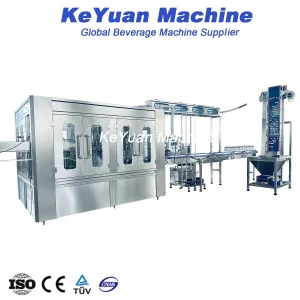
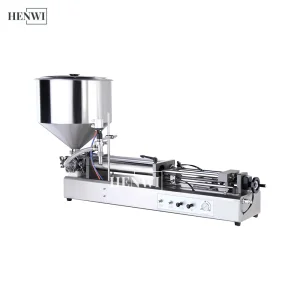
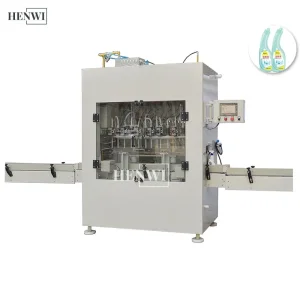
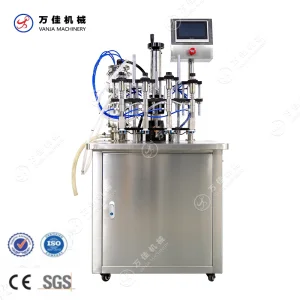
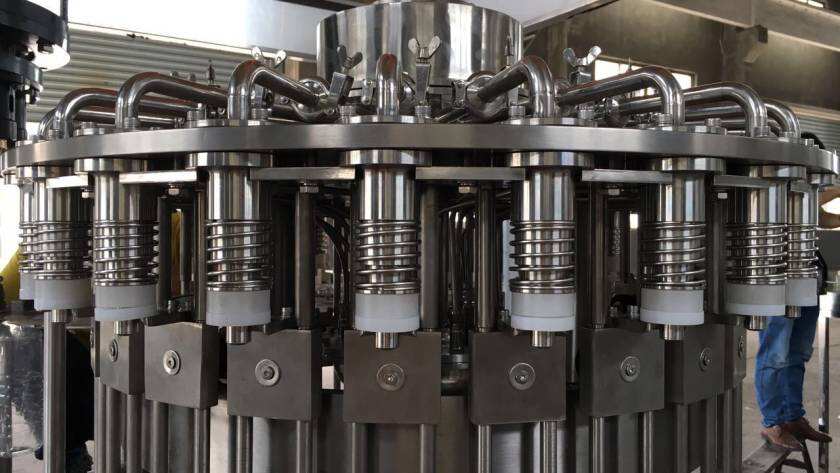
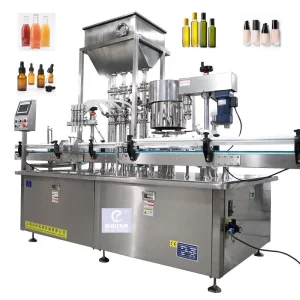
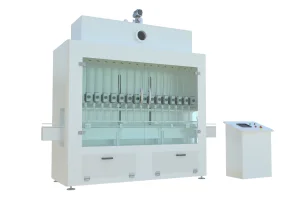
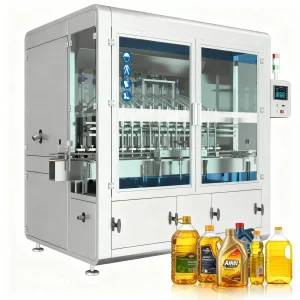
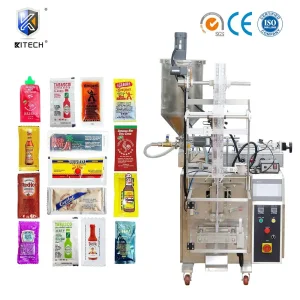
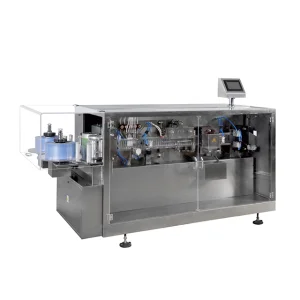
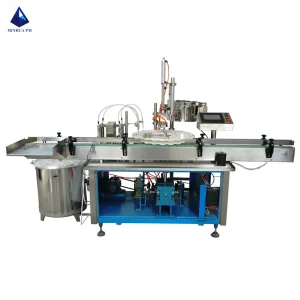
Engineered for accuracy, scalability, and long-term operating durability across diverse viscosities.
The global fluid packaging landscape is undergoing a tectonic shift driven by consumer trends, safety mandates, and industrial automation. Today, gel and liquid filling machines are no longer judged solely by their output speed. Modern facilities require a synergy of precision mechanics, rheological adaptability, and preventative digital diagnostics.
Viscous materials like sanitizing gels, organic lotions, food-grade pastes, and chemical emulsions present non-Newtonian flow behavior. Our advanced systems adapt pump speeds, vacuum levels, and nozzle strokes in real-time to avoid product shearing, foaming, or splashing.
Several dynamic factors shape the research and development pipeline of filling machinery today:
Unlike water, high-viscosity gels exhibit shear-thinning (pseudoplastic) traits. When static, their viscosity is high; under shear force inside the nozzle, they flow freely. Our machines utilize specifically engineered positive shut-off nozzles combined with blow-back or vacuum suck-back steps. This ensures that the moment the preset volume is filled, the liquid flow cuts off instantly, entirely eliminating the "drip trail" that causes contamination on sealing areas and bottles.
Why global companies trust Hebei Yongli for turnkey bottling infrastructure.
Tailored layout configurations, customized electrical standards (UL, CE, CSA), and specialized pump configurations tailored to exact chemical makeup.
Direct upstream sourcing of high-grade raw stainless steel and integration with global electronic component providers (Omron, Festo, Schneider) ensures robust operation.
Modular engineering layouts allow for the rapid design, prototyping, fabrication, testing, and shipping of multi-head automatic machinery without delays.
For international procurement directors, securing a packaging machine is an investment meant to last decades. Key considerations encompass compliance with native sanitary regulations, electrical code certification, and maintenance simplicity.
Different jurisdictions dictate varying expectations regarding machine build qualities:
Filling alcohol-based liquids requires spark-proof or explosion-proof electrical systems (Class 1 Division 1 / ATEX Zone 1 compliance). The machinery must utilize pneumatic logic controls or purge-pressurized enclosures to guarantee high operation safety.
Cosmetics filling demands aesthetic care. Nozzles must dip deep into the bottom of the container, rising gradually with the liquid surface level to prevent air entrapment (bubbling) and cosmetic separation. Precise capping systems with torque feedback controls prevent scratching cosmetic caps.
Piston hoppers are equipped with thermal heating jackets and agitators to decrease thick product viscosity for easier flow control. Machine design must fully prevent dead-corners inside pipelines to inhibit bacterial growth.
Founded in 2009, Hebei Yongli Machine Co., Ltd covers an area of 15,000㎡. We are a leading enterprise in research and production of liquid and beverage packing machines. Over the past decade, we have dedicated ourselves to solving complex bottling challenges, engineering reliable solutions for global markets.
Our comprehensive production facility and dedicated engineering division allow us to design, fabricate, and test standard and custom-engineered machines. Our main products include: water treatment plants, beverage and daily chemical filling machines, labeling machines, film shrink wrapping and carton packing machines, and complete beverage processing and production lines.
We prioritize operational change management within workflows, ensuring your team has the skills, tools, and technical resources to maximize production uptime.
Bottle, label, and machine layout design customized to match your product geometry and physical workshop footprint.
Upon deposit confirmation, we commence manufacturing according to bottle parameters and detailed layout layouts.
Once machines land at your facility, our field engineers travel to conduct installation, calibration, and team training.
Free online remote engineering support, fast component replacement during warranties, and lifetime software updates.
Resolving common questions regarding gel and liquid packaging configurations.
Gear pump fillers rely on rotation calculation and work best with self-leveling liquids and low-to-medium viscosity fluids. Piston fillers use volumetric cylinders that physically draw and push a set volume, making them highly effective for thick, high-viscosity gels and pastes containing particulates. Piston systems generally maintain accuracy under wide temperature variations better than gear pumps.
We use customized pneumatic cut-off nozzles with internal spring-loaded or air-actuated pin valves. After dispensing, a pneumatic blow-back or vacuum suck-back sequence draws residual fluid back into the nozzle, eliminating the formulation of drops on the tip.
Yes, provided it is configured with adjustable stroke limits and speed controls. A servo-driven volumetric piston filler can be reprogrammed on the HMI touch panel to adjust stroke speeds according to the specific viscosity profile of the liquid. Some changes in nozzle diameters and suction paths may be required for optimal flow patterns.
Ensure that all fluid contact surfaces are constructed of SUS 316L, and that O-rings are made of FDA-approved silicone or PTFE. Quick-disconnect tri-clamp connections should be utilized to facilitate daily inspection, cleaning, and sterilization without hidden cavities.
We deploy English-speaking engineering staff directly to the destination facility to manage structural assembly, mechanical alignment, system calibration, and plant training. Prior to shipping, we supply detailed documentation, drawings, and interactive video walkthroughs to assist with initial preparation.
Explore our high-speed linear filling platforms, specialty pump components, and integrated capping lines.
 Yongli Machine