Temperature plays a crucial role in liquid filling efficiency. Understanding how temperature affects liquid filling performance can lead to better industrial practices. As liquids heat or cool, their viscosity changes. This change can directly influence the speed and accuracy of the filling process.
For example, warmer liquids often flow more easily. This can lead to a faster filling rate. However, if the temperature is too high, other issues may arise, such as foaming or splashing. On the other hand, colder liquids tend to thicken. This can slow down the filling process, causing delays and potential inaccuracies.
Many industries face challenges related to temperature management during filling operations. These challenges can lead to increased downtime and product waste. Reflecting on these issues is essential to improve overall efficiency and product quality. Understanding how temperature affects liquid filling performance remains a vital area of study for engineers and production managers alike.
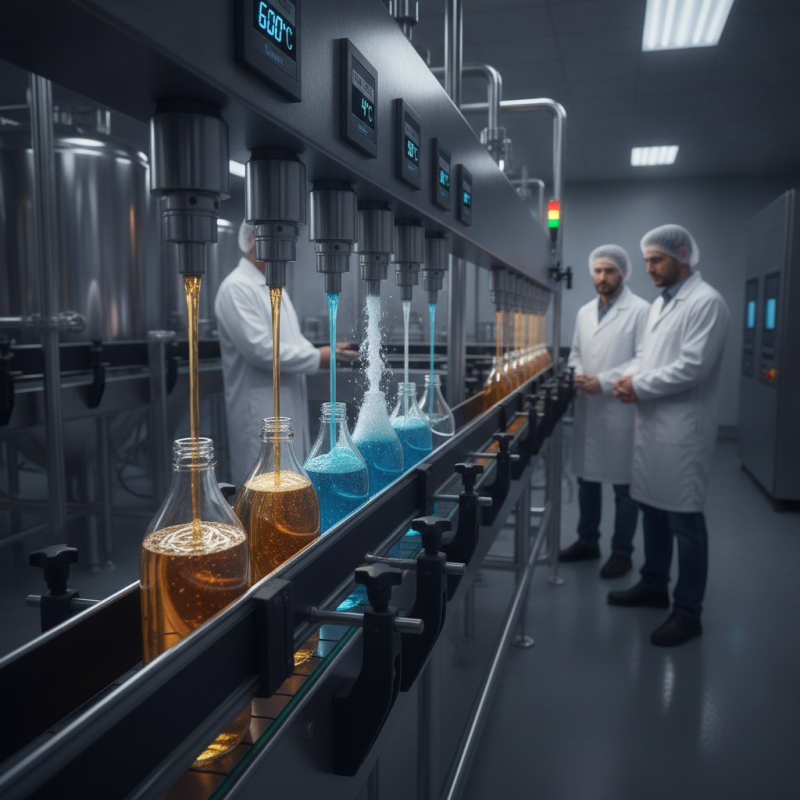
The Relationship Between Temperature and Liquid Viscosity
Temperature plays a crucial role in determining liquid viscosity. Viscosity refers to a liquid's resistance to flow. As temperature rises, most liquids become less viscous. This change in viscosity can significantly impact filling efficiency in various industries.
Imagine a thick syrup poured at room temperature. It flows slowly, taking time to fill a container. Now, consider heating that syrup. At higher temperatures, it becomes thinner and flows much faster. This difference can influence production rates and efficiency. Operators must balance temperature adjustments carefully to optimize outcomes.
However, not all liquids behave the same way. Some might become too thin at high temperatures, leading to other issues like foaming or splashing. This complexity requires careful monitoring and adjustments. Understanding the relationship between temperature and viscosity can help operators make better decisions, enhancing overall liquid filling processes.
Effect of Temperature on Filling Rate in Liquid Packaging Systems
Temperature plays a crucial role in liquid packaging systems. It directly influences the viscosity of liquids, affecting how quickly they can be filled into containers. Higher temperatures often reduce viscosity, allowing liquids to flow more freely. Conversely, colder liquids can become thicker, slowing down the filling process. This relationship is vital for achieving optimal filling rates.
Monitoring temperature is essential for improving filling efficiency. For instance, during production, minor fluctuations in temperature can lead to significant changes in filling speed. If operators do not adjust to these variations, they may face delays and wasted resources. It's crucial to maintain a consistent temperature throughout the operation. However, achieving this can be challenging, especially in large-scale systems.
Additionally, one must consider the impact of temperature on the materials used in packaging. Some materials may expand or contract with temperature changes, potentially affecting seal integrity. Operators need to find a balance between temperature control and material compatibility. This ongoing challenge requires careful attention and frequent adjustments to ensure efficiency in liquid filling operations.
Impact of Temperature Variations on Pumping Efficiency of Liquids
Temperature plays a crucial role in the efficiency of liquid filling processes. As liquid temperature increases, its viscosity typically decreases. This reduction means that liquids flow more easily, which can enhance the filling rate. According to a study by the The American Society of Mechanical Engineers, a 10°C rise in temperature can decrease viscosity by up to 50% for certain liquids. Such changes can significantly boost the output of liquid filling systems.
However, not all temperature adjustments lead to improved efficiency. For example, certain liquids may experience instability at higher temperatures. The chemical properties could alter, causing reactions that affect performance. In cases where temperature varies widely, it might disrupt the consistency of the filling process, leading to errors in volume and time. Reports indicate that fluctuation of 5°C in highly viscous liquids can result in a 20% inefficiency in filling times.
Monitoring these variations is essential. Implementing precise temperature control mechanisms can help mitigate adverse effects. For instance, data from industrial performance metrics show that facilities with optimized thermal regulation experience a 15% increase in overall filling efficiency. Though promising, this balance requires careful consideration. Not all systems adapt well to temperature changes, and constant monitoring becomes vital for sustained performance.
Influence of Temperature on Liquid Flow Dynamics During Filling
Temperature plays a crucial role in liquid filling processes. It directly impacts liquid flow dynamics. When the temperature increases, the viscosity of liquids generally decreases. For instance, at 60°C, the viscosity of water reduces significantly compared to its viscosity at 20°C. According to a report by the American Society of Mechanical Engineers, reduced viscosity allows for faster filling speeds, with flow rates improving by up to 30%.
However, there are challenges to consider. If the temperature exceeds optimal levels, it may lead to cavitation or vaporization. This can disrupt the filling process, causing inconsistent flow rates. Reports indicate that maintaining a stable temperature range is essential for minimizing downtime and maximizing efficiency. In some cases, slight fluctuations in temperature can cause unexpected delays, which may impact overall productivity.
Another aspect to look into is the material of the containers. Some materials are less tolerant to temperature changes. For example, certain plastics can warp under higher temperatures, affecting the filling process. Monitoring temperature precisely and adjusting accordingly is essential for maintaining liquid integrity and filling efficiency. This balance is not always easy; it requires constant attention and adjustments.
Temperature Control: Strategies to Optimize Liquid Filling Processes
Temperature plays a crucial role in liquid filling efficiency. Maintaining optimal temperatures can significantly impact the viscosity of the liquid. For example, a study by the American Society of Mechanical Engineers noted that a 10°C increase in temperature could reduce viscosity by up to 20%. This reduction leads to faster fill rates and a decrease in waste during the filling process.
To optimize filling processes, temperature control strategies must be implemented. Insulated tanks can help maintain the ideal temperature of liquids. A precise heating system is crucial, as fluctuations can cause inconsistencies. Data from a packaging industry report highlighted that 73% of manufacturers improved their filling efficiency by using temperature control systems.
However, achieving the right temperature is not always straightforward. Overheating can alter product properties, while underheating may lead to slower operations. Continuous monitoring is necessary. Implementing sensors can provide real-time data, allowing for immediate adjustments. Investing in such technology might require upfront costs, but the long-term savings and efficiency gains are significant. Ensuring the right balance is key to a successful liquid filling process.
FAQS
: Viscosity measures a liquid's resistance to flow.
Most liquids become less viscous as temperature rises. Higher temperatures lead to faster flow rates.
Optimal temperatures can improve filling efficiency and reduce waste.
Syrup flows slowly and takes time to fill containers.
No, some liquids may become too thin and cause foaming or splashing.
Using insulated tanks can help keep liquids at ideal temperatures.
Fluctuations can cause inconsistencies and affect the filling process negatively.
Yes, it may require upfront costs but can lead to long-term savings.
It allows for real-time adjustments, enhancing operational efficiency.
No, it requires careful balancing to avoid overheating or underheating.
Conclusion
The article titled "How does temperature influence liquid filling efficiency?" explores the critical relationship between temperature and liquid filling performance. It begins by examining how temperature affects liquid viscosity, noting that higher temperatures typically result in lower viscosity, which enhances flow rates. The discussion then shifts to the effect of temperature on filling rates in liquid packaging systems, emphasizing that optimal temperatures can significantly increase throughput.
Moreover, the article delves into the impact of temperature variations on pumping efficiency, highlighting that maintaining consistent temperatures can minimize energy consumption and improve overall system reliability. It also addresses the influence of temperature on liquid flow dynamics during the filling process, revealing how fluctuations can disrupt filling accuracy. To optimize liquid filling processes, effective temperature control strategies are necessary, ensuring that systems operate at ideal conditions for maximum efficiency. Overall, this comprehensive analysis emphasizes the crucial question: "How does temperature affect liquid filling performance?

 Yongli Machine