In 2026, liquid filling machine safety is not a single certificate or checklist. Requirements depend on where the equipment operates, what it fills, and how workers interact with it. What safety standards apply to liquid filling machinery is therefore a practical question, not just a search phrase. A sound review may consider machinery risk assessment, electrical safety, guarding, emergency stops, and hygienic design. Standards such as ISO 12100 and IEC 60204-1 can provide useful frameworks, but their applicability must be checked against local regulations and the machine’s intended use.
Look closely at the actual line. A loose guard near a capping head, a wet floor below a nozzle, or an exposed cable beside a washdown zone can turn a compliant design into a real hazard. Small details matter. Reviewers should document hazards, verify safety controls, and confirm that cleaning and maintenance procedures match the equipment. Food, beverage, cosmetic, and pharmaceutical applications may also require different hygiene controls and materials. Ask the manufacturer for technical files, declarations, risk assessments, and operating instructions; then check them against site conditions. Paperwork helps, but it cannot replace a careful inspection. And a checklist can still miss something. That is worth admitting. This guide explains how to identify relevant standards, assess machine safeguards, and prepare for a defensible 2026 safety review without treating one market’s rules as universal.
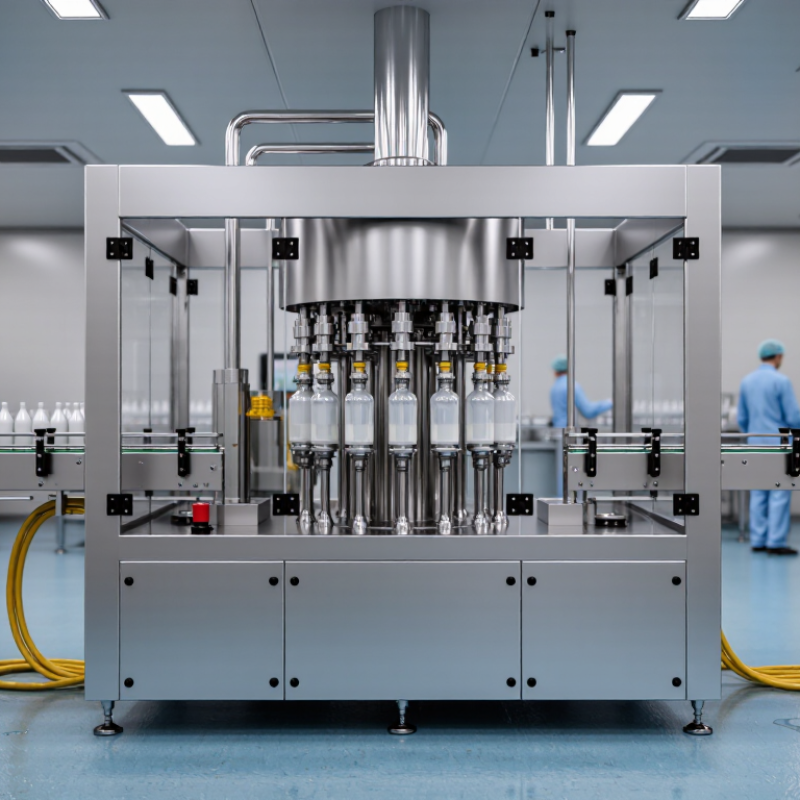
In 2026, liquid filling machine safety begins with identifying the rules for the machine’s destination and use. A machine installed in the European Union may require compliance with the Machinery Directive during the transition period. The Machinery Regulation should also be monitored for its future application date. Electrical, electromagnetic compatibility, and pressure-related requirements may apply separately. Check the date. Harmonized standards can support conformity, including EN ISO 12100 for risk assessment and EN 60204-1 for machine electrical equipment.
Food, cosmetics, and pharmaceutical applications create additional obligations. Food-contact surfaces may need to meet applicable material rules, such as European food-contact legislation or relevant United States requirements under Title 21 of the Code of Federal Regulations. Hygienic design should address drainability, cleanable joints, dead spaces, and compatible sealing materials. In the United States, review workplace safety rules, guarding provisions, and applicable electrical standards. Other regions may use national machinery regulations, certification schemes, or local adoption of international standards.
A practical review should map each hazard to a specific clause and test record. Inspect nozzles, conveyors, access doors, emergency stops, and control-panel wiring. Verify that filling pressure, temperature, and chemical exposure remain within documented limits. Keep records. Do not rely on an old declaration of conformity without checking its scope and revision date. Our checklist is not flawless; local interpretation can differ between authorities. Ask a qualified safety professional to confirm the final requirements before installation, modification, or commissioning.
| Market or Region | Applicable Regulation or Standard | 2026 Applicability | Main Safety Expectations for Liquid Filling Equipment | Recommended Compliance Evidence |
|---|---|---|---|---|
| European Union and European Economic Area | Machinery Directive 2006/42/EC | Generally applicable during 2026 for machinery placed on the EU market, before the new Machinery Regulation becomes applicable. | Risk assessment, safeguarding of moving parts, prevention of unexpected start-up, emergency stopping, safe control systems, instructions, technical documentation, and conformity assessment. | Signed EU Declaration of Conformity, technical file, risk assessment, drawings, test records, operating instructions, and CE marking where required. |
| European Union and European Economic Area | Regulation (EU) 2023/1230 on Machinery | Applies from 20 January 2027. It should be considered in 2026 design, procurement, and documentation planning. | Strengthens requirements for safety-related control systems, software and digital documentation, cybersecurity-related risks affecting safety, and high-risk machinery categories. | Gap assessment against the 2027 regulation, updated risk analysis, software and control-system validation records, and a transition plan. |
| European Union | Directive 2014/35/EU – Low Voltage Directive | Relevant when the machine operates within the directive’s voltage ranges and is placed on the EU market. | Protection against electric shock, insulation and dielectric strength, protection from overheating, suitable enclosures, grounding, and electrical documentation. | Electrical inspection reports, circuit diagrams, protective-device calculations, enclosure evaluations, and EU Declaration of Conformity. |
| European Union | Directive 2014/30/EU – Electromagnetic Compatibility | Relevant to electrically operated filling, capping, conveying, control, and inspection systems. | The machine must not create unacceptable electromagnetic disturbance and must maintain safe operation when exposed to expected electromagnetic conditions. | EMC risk assessment, test results or justified technical assessment, cable and shielding specifications, and installation instructions. |
| European Union and other food-processing markets | EN 1672-2:2020 – Food Processing Machinery: Hygiene Requirements | Relevant to filling machines used for food, beverages, and other hygienically controlled products. It is a harmonized-style technical reference where applicable. | Cleanable and drainable product-contact areas, hygienic materials, minimized product retention, controlled contamination risks, suitable seals, and hygienic access for inspection. | Hygienic design review, material certificates, cleanability validation, drainage assessment, seal specifications, and cleaning instructions. |
| United States | OSHA 29 CFR 1910.212 – General Requirements for Machine Guarding | Applicable to employers operating liquid filling machinery in workplaces under federal OSHA jurisdiction, subject to local enforcement arrangements. | Guards must protect employees from points of operation, rotating parts, nip points, flying materials, and other recognized machine hazards. | Guarding inspection records, operator training, hazard assessments, maintenance procedures, and documented corrective actions. |
| United States | OSHA 29 CFR 1910.147 – Control of Hazardous Energy | Applicable where servicing or maintenance could expose personnel to electrical, pneumatic, hydraulic, thermal, chemical, or stored energy. | Written energy-control procedures, isolation of all energy sources, lockout or tagout, verification of zero energy, and authorized-employee training. | Machine-specific lockout procedures, isolation-point diagrams, annual procedure inspections, training records, and maintenance permits. |
| United States | OSHA 29 CFR 1910.219 – Mechanical Power-Transmission Apparatus | Relevant where filling lines contain exposed gears, belts, chains, shafts, couplings, or other power-transmission components. | Power-transmission parts must be guarded to prevent contact with hazardous moving components during normal operation. | Guarding drawings, inspection checklists, access-control records, and evidence that guards cannot be easily bypassed. |
| International | ISO 12100:2010 – Safety of Machinery: Risk Assessment and Risk Reduction | Widely used as the basic methodology for machinery safety design and risk assessment. It is not, by itself, a jurisdictional law. | Define machine limits, identify hazards throughout the life cycle, estimate and evaluate risk, then apply inherently safe design, safeguarding, and information measures. | Documented risk assessment covering filling, changeover, cleaning, jam clearing, maintenance, commissioning, and foreseeable misuse. |
| International | ISO 13849-1:2023 – Safety-Related Parts of Control Systems | Relevant when safety functions are implemented through control systems, including guards, interlocks, emergency stops, and safety-related sensors. | Specify required Performance Level, architecture, diagnostic coverage, reliability data, common-cause-failure measures, and validation of safety functions. | Safety-function list, Performance Level calculations, circuit schematics, component data, software validation, and functional test records. |
| International | IEC 60204-1:2016+A1:2021 – Safety of Machinery: Electrical Equipment | Commonly used for the electrical equipment of machinery and may be referenced by regulations, contracts, or certification programs. | Main disconnecting means, protective bonding, overcurrent protection, control circuits, emergency stop functions, wiring identification, and verification tests. | Electrical schematics, protective-bonding test results, insulation tests, functional tests, panel inspection records, and operating instructions. |
| International | ISO 14159:2002 – Safety of Machinery: Hygiene Requirements for the Design of Machinery | Useful for hygienic design of filling machines handling food, beverages, cosmetics, pharmaceuticals, or other contamination-sensitive liquids. | Design should reduce contamination, allow effective cleaning and disinfection, prevent liquid accumulation, and use suitable product-contact materials. | Hygienic risk assessment, product-contact material list, surface-finish specifications, cleaning validation, and inspection-access review. |
| All markets handling flammable liquids | Explosion-risk and hazardous-location requirements, such as ATEX 2014/34/EU and workplace explosive-atmosphere controls where applicable | Applicable only when the liquid, vapor, mist, or dust can create an explosive atmosphere. The exact requirements depend on the product and installation classification. | Control ignition sources, manage static electricity, provide bonding and grounding, select suitable equipment for the classified zone, and control ventilation and vapor release. | Safety data sheets, hazardous-area classification, ignition-hazard assessment, bonding tests, ventilation calculations, and equipment conformity documentation. |
| Food and beverage operations | EU food-hygiene framework, including Regulation (EC) No 852/2004, or equivalent local food-safety requirements | Applicable when the filling process is used for food or beverages placed on the relevant market. | Hygienic production conditions, prevention of contamination, effective cleaning, suitable personnel practices, controlled water and product contact, and documented food-safety procedures. | HACCP documentation, sanitation procedures, cleaning records, allergen controls, environmental monitoring where applicable, and corrective-action records. |
Check the rules for the machine’s destination and use. Requirements can differ by region and application. Confirm the current requirements with a qualified safety professional.
Risk assessment, electrical safety, and safeguarding standards can provide useful guidance. Check their current editions and local adoption. Dates matter.
Review material suitability and hygienic design. Surfaces should drain and clean easily. Check joints, hidden spaces, and seals for residue traps.
Consider moving pumps, unexpected starts, pressure release, hot surfaces, chemical exposure, and slippery floors. Include routine cleaning and nozzle changes.
Guard drives and filling heads with suitable barriers and interlocked doors. Check safe distances. Clear panels help visibility, but foam can block the view.
Test emergency stops, door switches, restart prevention, and fault detection. Simulate sensor failures and open-door conditions. A checklist can still miss real behavior.
Keep hazard assessments, test results, and documented operating limits for pressure, temperature, and chemical exposure. Record revisions and inspection dates.
Test with empty containers, spills, open doors, and simulated faults. Watch how safeguards behave during washdown. This review may not catch everything.
Meeting liquid filling machine safety standards in 2026 requires a structured approach that combines regulatory awareness, risk assessment, safe engineering, and continuous improvement. Begin by asking, “What safety standards apply to liquid filling machinery” in the intended operating location, then identify relevant requirements for electrical safety, machinery protection, sanitation, pressure, and workplace practices. Evaluate hazards such as moving components, liquid spills, unexpected startup, chemical exposure, and cleaning activities, assigning risk levels according to their potential severity and likelihood.
The machine should include suitable guarding, emergency stops, safe access points, reliable sensors, and control systems designed to prevent unintended operation. Clear procedures must cover startup, normal operation, changeovers, cleaning, lockout, inspection, and maintenance, with appropriate training and protective equipment. Finally, maintain organized records of risk assessments, inspections, training, corrective actions, and conformity evidence. Schedule regular safety reviews to address process changes, equipment modifications, incidents, and updated regulatory expectations, ensuring compliance remains effective throughout the machine’s service life.

 Yongli Machine