In the liquid filling industry, precision is paramount. One key question often arises: "What factors affect filling accuracy in liquid filling equipment?" According to Dr. Emily Chen, a renowned expert in liquid dispensing technology, “Even small variances in equipment settings can lead to significant discrepancies in filling accuracy.” This highlights the need for thorough understanding and oversight.
Several elements contribute to filling accuracy. These include equipment calibration, environmental conditions, and fluid characteristics. For instance, temperature fluctuations can change a liquid's viscosity, impacting flow rates. Additionally, operator skill plays a vital role, as human errors can introduce variability. With numerous variables at play, achieving flawless performance is often a challenge.
The quest for precision is essential but not always attainable. Manufacturers must consider these factors regularly. Continuous improvement in equipment design and operation can lead to better accuracy. However, reflection on current processes reveals persistent gaps that need attention. Addressing these complexities is crucial to enhance the accuracy of liquid filling operations.
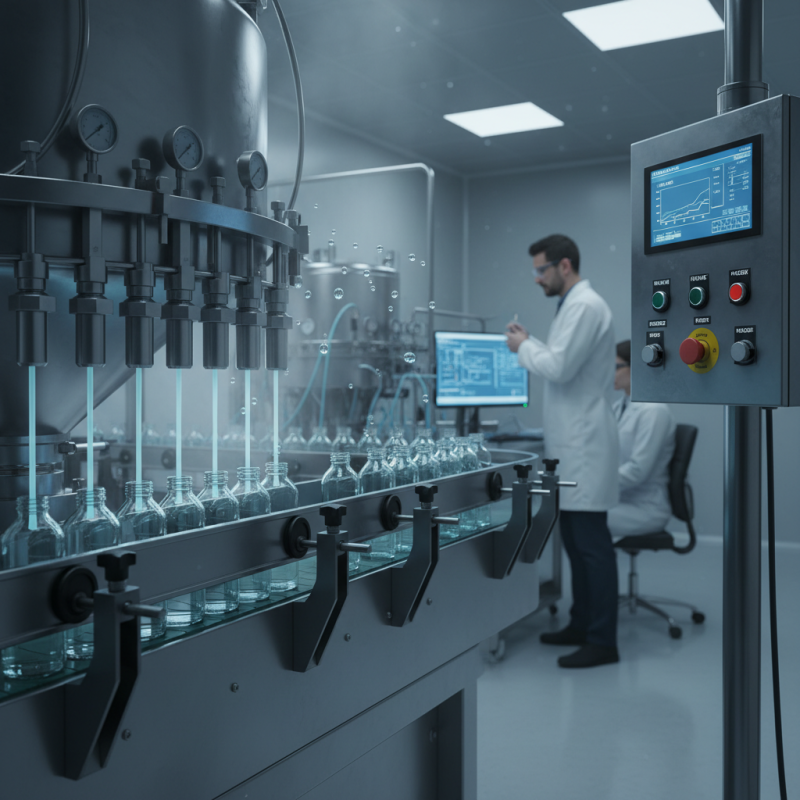
In liquid filling processes, liquid density plays a crucial role in determining accuracy. Variations in temperature and pressure can lead to changes in liquid density. For instance, a study by the National Institute of Standards and Technology reveals that temperature changes can alter liquid density by up to 0.5%. This fluctuation significantly affects filling precision, especially in high-speed production lines.
Furthermore, the characteristics of the liquid itself contribute to filling challenges. Viscosity, for example, can vary dramatically. According to the American Society of Mechanical Engineers, liquids with lower viscosity fill containers more evenly. Yet, as viscosity increases, the risk of underfilling or overfilling rises notably. Accurate density measurements become essential in these scenarios.
An often-overlooked factor is equipment calibration. Improperly calibrated filling machines can lead to significant discrepancies. A report by the International Society of Automation indicates that as much as 10% of filling errors are due to calibration issues. This highlights the importance of regular maintenance and quality checks. Understanding and controlling these variables ensures greater accuracy in liquid filling operations.
Calibration plays a crucial role in ensuring the accuracy of liquid filling equipment. Proper calibration involves adjusting the machinery to meet specific standards. This process is essential for achieving consistent fill levels. Inaccurate fills can lead to product loss, customer dissatisfaction, and regulatory issues.
Regular calibration checks help identify any discrepancies in the equipment. Many factors can influence these results, including wear and tear, environmental conditions, and operator handling. It’s vital to recognize that even slight deviations can affect overall performance. Operators should receive ongoing training to correctly assess calibration needs.
Relying solely on automated systems is not enough. Human oversight is necessary to maintain accuracy. Equipment may not always perform as expected, requiring periodic reviews and adjustments. Maintaining a good calibration schedule can minimize errors. Ultimately, investing in thorough calibration practices is essential for long-term success.
The nozzle design significantly impacts the precision of liquid filling equipment. An effective nozzle must dispense the right amount with minimal variation. Factors like diameter, length, and shape determine flow rates and droplet size. A well-designed nozzle can reduce splash and drips. This is crucial for maintaining product integrity.
Tip: Consider nozzles with different angles. A specific angle can enhance precision, especially for viscous liquids.
Fluid viscosity also plays a role. Thicker liquids may require larger nozzles or special designs. Traditional nozzles might not provide the desired accuracy under such conditions. Experimenting with nozzle configurations can lead to better results.
Tip: Regular maintenance of nozzles ensures consistent performance. Clogged or worn-out nozzles can lead to discrepancies in filling volumes.
Optimizing nozzle design improves overall system efficacy. Balancing speed and precision is essential. Testing various designs helps identify the best fit for your needs. Sometimes, trial and error is necessary to find the perfect solution.
| Nozzle Design Type | Filling Accuracy (%) | Flow Rate (L/min) | Product Viscosity (cP) | Drop Height (cm) |
|---|---|---|---|---|
| Standard Round Nozzle | 95% | 30 | 100 | 5 |
| Flat Nozzle | 98% | 25 | 150 | 3 |
| Angled Nozzle | 92% | 40 | 75 | 6 |
| Pressure-Activated Nozzle | 99% | 35 | 90 | 4 |
| Automatic Closure Nozzle | 97% | 28 | 110 | 2 |
Environmental conditions play a critical role in the accuracy of liquid filling equipment. Factors such as temperature, humidity, and air pressure can significantly affect the performance of filling machines. For example, high humidity can cause liquids to behave unpredictably, leading to overfilling or underfilling. Similarly, fluctuations in temperature can alter the viscosity of certain liquids, impacting measurement consistency.
Temperature variations not only influence the flow characteristics but also the machine's calibration. When temperatures rise or drop, the filling equipment may require re-calibration to maintain accuracy. Inadequate adjustments can lead to operational inefficiencies. These inconsistencies highlight the ongoing need for regular monitoring and maintenance of equipment to address environmental changes.
Moreover, cleanliness of the environment cannot be overlooked. Dust and particles can contaminate liquids, affecting their weight and density. This contamination may introduce errors in the filling process. Keeping a controlled environment is essential, yet often overlooked. It's a reminder that even minor imperfections in environmental conditions can lead to significant issues in liquid filling accuracy.
Operator technique plays a crucial role in the accuracy of liquid filling equipment.
A study from the International Society for Pharmaceutical Engineering (ISPE)
highlights that nearly 30% of filling inaccuracies stem from operator error.
This suggests a significant room for improvement in training and technique refinement.
In a recent survey, 75% of facility managers identified operator training as essential for achieving consistency.
Precision in filling depends not just on the machine, but heavily on how the operator interacts with it.
Inconsistent filling can lead to negative outcomes, such as product loss or regulatory non-compliance.
Focused training programs have shown to enhance operator skill, leading to improved filling accuracy and reduced waste.
Moreover, the environment also impacts operator technique. It was noted that factors like temperature and humidity can influence liquid viscosity.
Hence, operators must adapt their techniques accordingly. Regular assessment of filling processes is necessary,
as even minor adjustments can lead to significant improvements in performance.
Reflection upon these practices could drive innovation within filling operations.
: Calibration ensures accuracy, consistent fill levels, and reduces product loss, customer dissatisfaction, and regulatory issues.
Regular checks are vital for identifying discrepancies due to wear and tear or environmental factors.
Temperature, humidity, and air pressure can affect flow rates and liquid behavior, leading to filling inaccuracies.
Yes, nozzle diameter, length, and shape affect flow rates and droplet size, influencing overall filling accuracy.
Regular maintenance prevents clogs and wear, which can cause discrepancies in filling volumes and performance.
Thicker liquids may need larger or specially designed nozzles to ensure accurate dispensing.
Yes, human involvement is essential, as automated systems alone may not detect all inaccuracies.
Temperature changes can affect machine performance, necessitating adjustments for consistent accuracy.
Dust and particles can contaminate liquids, affecting their weight and causing measurement errors during filling.
Experimenting with different designs can help identify the best fit for a specific liquid filling need.
The article "What Factors Impact Accuracy in Liquid Filling Equipment?" explores several critical elements that influence filling accuracy in liquid filling processes. It begins by examining how liquid density can vary based on temperature and composition, which directly affects the precision of filling. Furthermore, the importance of regular calibration of equipment is highlighted, ensuring that measurements remain accurate over time.
The design of the filling nozzle is another pivotal factor, as it can significantly impact the flow rate and ultimately the fill volume. Additionally, environmental conditions such as humidity and temperature fluctuations are discussed for their roles in affecting the performance of the equipment. Lastly, the influence of operator technique is considered, emphasizing that skill and consistency in handling the equipment can enhance filling accuracy. Together, these factors provide a comprehensive insight into what factors affect filling accuracy in liquid filling equipment.

Yongli Machine