In the rapidly evolving landscape of liquid product manufacturing, understanding "How to design a filling line for multiple liquid products" is crucial. The global liquid packaging industry is expected to grow at a CAGR of 4.7% from 2021 to 2028, reaching approximately $370 billion. This growth demands innovative solutions to optimize filling lines, especially for manufacturers producing diverse liquids with varying characteristics.
The challenges in designing versatile filling lines lie in accommodating different viscosities and container types. Manufacturers must invest in advanced technologies that enhance flexibility and efficiency. For example, integrating AI-driven systems can streamline the selection of equipment. It can also improve productivity and reduce waste significantly. However, this requires careful planning and ongoing adjustments. Ignoring the importance of initial assessments can lead to costly adjustments later.
As the industry prepares for events like the 2026 Canton Fair, where innovation will be highlighted, companies must strategize effectively. Adopting AI for navigating supplier options and optimizing production will be essential. The filling line setup not only impacts operational flow but also determines product integrity. A focus on these factors can lead to improved performance and reliability in the long term.
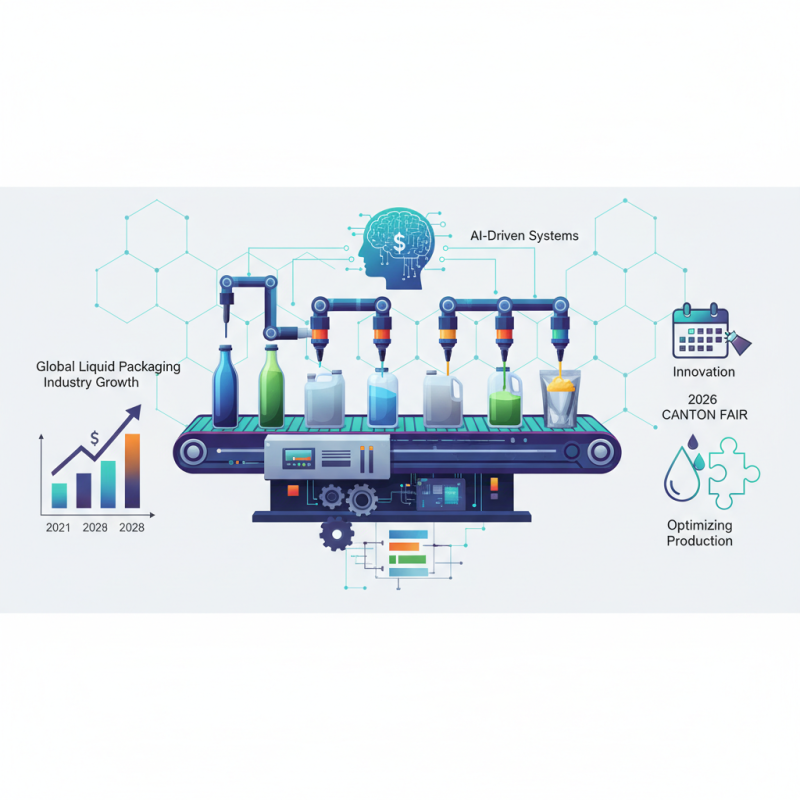
Designing a filling line for multiple liquid products involves critical equipment selection. The right equipment ensures efficiency, quality, and flexibility. Think about the type of liquids you will handle. Will they be viscous, corrosive, or delicate? This aspect greatly influences your choice of filling systems.
Consider a filling machine that can accommodate different container sizes. This adaptability is crucial. You might encounter various bottle shapes and materials. Each requires a unique approach for optimal filling. Assess the speed requirements, too. High-speed lines can boost productivity but may introduce complexity.
Don’t overlook sanitation standards. Liquids often require different cleaning protocols. This means your filling line should be easy to disassemble and clean. You may also want to choose equipment with advanced technology. However, integrating new technologies can come with its own challenges. Training staff might take longer than expected. Reflection on these aspects can save costly errors later.
Designing an efficient layout for a filling line in 2026 requires strategic planning. Industry reports indicate that 70% of production facilities will prioritize flexibility. This is crucial when dealing with multiple liquid products. Configuring an adaptable space can streamline operations, reducing downtime during product changeovers. Effective use of space is essential.
Consider the arrangement of equipment and storage areas. A linear layout can simplify the process but may not be ideal for every product. In fact, 30% of manufacturers find that a U-shaped design enhances workflow efficiency. This approach minimizes the distance between filling and packaging stations, improving speed. However, it may lead to congestion if not assessed properly.
Another aspect to reflect on is technology integration. Automated systems can boost productivity by 40%. Yet, the initial setup costs may be daunting for smaller businesses. Balancing automation and manual processes remains a challenge. Continuous assessment of layout effectiveness will be vital as product lines evolve. Implementing flexible design solutions will support future growth and adaptability.
In 2026, designing a filling line will heavily rely on automation and innovative technology. Modern filling lines must integrate smart systems to handle various liquid products. This means using flexible machinery that can adapt to different bottle shapes and sizes. Sensors will play a crucial role in monitoring fill levels and ensuring accuracy.
Employing robotics can streamline the packing process. Robots can be used for loading and unloading quickly. However, one must consider the initial complexity and potential downtime. System failures can disrupt the entire operation. Regular maintenance and staff training will be essential. Each mistake can lead to waste and financial loss, prompting continuous evaluation of processes.
Computerized systems can collect data, providing insights into production efficiency. Smart software tracks workflow and identifies bottlenecks. However, relying too much on technology may overlook human intuition and experience. Blending automated solutions with skilled operators will likely yield the best results. Balancing these elements is a challenge, but it is critical for future success.
| Product Type | Filling Speed (L/min) | Automation Level | Technology Used | Changeover Time (min) |
|---|---|---|---|---|
| Beverage | 200 | High | Robotic Arm, Sensor Technology | 15 |
| Cosmetic | 100 | Medium | PLC Systems, Flow Meters | 10 |
| Pharmaceutical | 150 | High | Artificial Intelligence, Vision Systems | 20 |
| Food | 180 | Low | Gravity Feed, Auger Filler | 12 |
| Chemical | 220 | Medium | Mass Flow Controllers, Sensors | 18 |
In 2026, designing a filling line for multiple liquid products will require a focus on safety and compliance. The Food and Drug Administration (FDA) and other regulatory agencies emphasize the importance of meeting strict guidelines. In fact, a recent industry report found that 70% of liquid product recalls are due to improper filling processes. This highlights the need for precision and quality control in every step.
To maintain product safety, automation systems must be regularly calibrated. Operators should conduct routine checks to ensure machines function correctly. Implementing real-time monitoring can alert staff to anomalies. According to industry statistics, proper monitoring can reduce error rates by up to 40%. Nevertheless, not all companies are adopting these technologies, leading to avoidable mistakes.
Training personnel is just as crucial. Workers need a deep understanding of compliance standards and safety protocols. Research indicates that 65% of filling line errors stem from inadequate training. Companies must invest in ongoing training programs to bridge this gap. Despite the costs, the investment can save substantial amounts in potential recalls and safety lawsuits. Adopting these practices is not just a regulatory requirement; it is vital for consumer trust.
Designing a filling line for multiple liquid products brings sustainability to the forefront. Often, manufacturers overlook the vital role of eco-friendly practices. It's essential to rethink the materials used in packaging and the efficiency of the filling process. Adopting sustainable materials reduces environmental impact. For instance, biodegradable containers can replace traditional plastic ones.
Tips: Prioritize suppliers who use recyclable materials. Evaluate the life cycle of your products to identify areas for improvement.
Energy consumption is another critical factor. Many filling lines waste energy, contributing to higher carbon footprints. Implementing energy-efficient machinery can help reduce waste. Regular maintenance is key to ensure optimal performance. Failing to address this can lead to unnecessary downtime.
Tips: Track energy usage closely. Set targets for reduction and monitor progress. Think about using renewable energy sources where possible.
It's important to engage employees in sustainability practices. Many may be unaware of how their actions impact the environment. Providing training can foster a culture of sustainability. Small changes can lead to significant improvements. However, it requires constant attention and commitment. Sustainable operations are a journey, not a destination.
: Strategic planning for flexibility is crucial when managing multiple products.
A linear layout may simplify processes, but a U-shaped design can improve workflow and speed.
Smart systems enhance productivity and can monitor fill levels accurately while adapting to various products.
Initial costs and complexity can be overwhelming. System failures may cause downtime and disrupt operations.
Using eco-friendly materials and adopting energy-efficient machinery can significantly reduce environmental impact.
Employee engagement is vital. Training helps them understand their impact on the environment.
Monitoring energy usage and setting reduction goals can lead to significant improvements.
Regular assessment helps identify inefficiencies and supports adapting to evolving product lines.
Over-reliance on technology can overshadow valuable human experience and intuition in operations.
If not assessed properly, minimizing distance between stations may create bottlenecks in production flow.
In "How to Design a Filling Line for Multiple Liquid Products in 2026," the article outlines essential considerations for selecting the appropriate equipment that accommodates various liquid formulations. The design must focus on creating an efficient layout that maximizes space and workflow, thereby increasing productivity.
Furthermore, integrating advanced automation and technology is crucial for enhancing operational efficiency and precision in filling processes. Ensuring product safety and compliance with industry standards is imperative to protect consumers and meet regulatory requirements. Lastly, the article emphasizes the importance of sustainability practices, advocating for environmentally friendly operations that reduce waste and energy consumption in filling line activities.

Yongli Machine